Faith: The Graffiti-Styled Font That Brings Urban Energy to Your Brand
There's a moment in every creative project when you realize the typography isn't just holding the words—it's carrying the entire mood. You've nailed the color palette, the layout feels balanced, but something's missing. The text looks flat, generic, like it could belong to any project from any era. That's when a typeface with genuine personality stops being a nice-to-have and becomes the missing piece. Faith is exactly that kind of font: a graffiti-styled modern color font designed for projects that need to feel alive, bold, and unmistakably urban.
What Makes Faith Different from Your Average Display Font
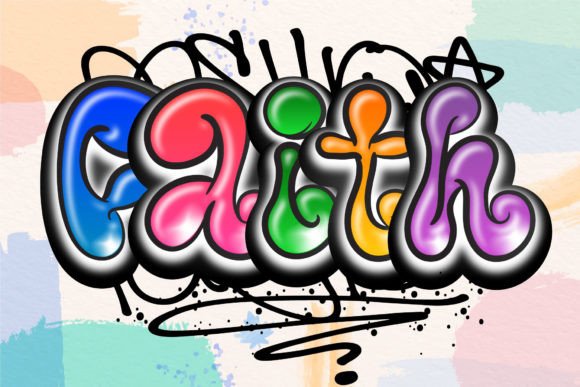
Faith isn't trying to be everything to everyone, and that's precisely its strength. Built as an OpenType-SVG color font, it carries the textured, layered energy of street art directly into your digital workspace. Each letterform has that hand-painted quality—drips, gradients, and color variations baked right into the glyphs. When you type with Faith, you're not getting a flat silhouette of a letter. You're getting something that looks like it was sprayed onto a brick wall yesterday afternoon.
This distinction matters more than you might think. Traditional fonts, whether serif, sans serif, or script, rely on single-color rendering. You apply a color, and the entire letter becomes that color. Faith works differently. The embedded color data means the texture, shading, and tonal shifts are part of the font file itself. In applications like Photoshop, Illustrator, Silhouette, and Inkscape, this translates to letters that feel three-dimensional and tactile without requiring extra design work on your end.
Of course, this also means Faith comes with specific compatibility notes. As an Opentype-SVG font, it works beautifully in the design software listed above, but the OTF and TTF files won't function in Cricut machines. If you're a crafter who relies on Cricut for cutting projects, it's worth understanding this limitation upfront. For everyone else working in professional design environments, the font opens up creative possibilities that standard typefaces simply can't match.
Where Faith Truly Shines: Real-World Applications
Let's talk about where a font like this actually earns its place in your toolkit. The beauty of Faith's graffiti-inspired aesthetic is that it carries instant cultural weight. Street art communicates rebellion, authenticity, creativity, and community—all without a single word of copy. When you use Faith in a project, you're borrowing that visual language.
Branding and Logo Design: If you're building a brand that targets younger demographics, urban markets, or creative industries, Faith can anchor your visual identity in ways a clean geometric sans serif never will. Think streetwear labels, independent record shops, skate brands, music festivals, or boutique coffee roasters with an edge. The font tells your audience something about your brand's personality before they read a single tagline. Pair it with a simple sans serif for body copy, and you've got a brand identity that feels both distinctive and functional.
Social Media Graphics: Platforms like Instagram and TikTok reward boldness. A post has roughly half a second to stop someone mid-scroll, and typography plays a massive role in that first impression. Faith's textured, colorful lettering naturally draws the eye in a feed full of clean minimalist posts. Use it for quote graphics, announcement posts, sale promotions, or story headers. The built-in color variation means your text doesn't need additional effects to stand out—it arrives ready to command attention.
Packaging Design: Product packaging on a crowded shelf faces the same challenge as a social media post: it needs to differentiate fast. Faith works particularly well for products that want to signal creativity, youthfulness, or an alternative sensibility. Think craft beverage cans, artisan snack packaging, cosmetics aimed at Gen Z consumers, or limited-edition product drops. The graffiti style suggests something exclusive and handcrafted, even when produced at scale.
Posters, Merchandise, and Event Materials: Concert posters, festival flyers, pop-up shop signage, merchandise designs—these are Faith's natural habitat. The font thrives in contexts where visual impact matters more than paragraph-length readability. A single word set in Faith across the front of a t-shirt or the header of an event poster communicates energy and attitude instantly.
Editorial Layouts and Digital Products: Magazine covers, blog headers, ebook chapter titles, and digital course graphics can all benefit from a display font that breaks the monotony of standard web typography. Faith works beautifully as an accent font—used sparingly for headlines, pull quotes, or section dividers—while letting a more neutral typeface handle the heavy lifting of body text.
Practical Advice for Working with a Font Like Faith
Having a visually striking font is one thing. Using it effectively is another. Here are some grounded recommendations for getting the most out of Faith in your projects.
Think in pairs, not singles. Faith is a display font, which means it's designed for impact at larger sizes. It's not the typeface you want running across a 200-word paragraph at 12-point size. Instead, use it for headlines, titles, and short bursts of text, then pair it with a clean serif font or a straightforward sans serif for supporting copy. The contrast between Faith's textured energy and a calm, readable body font creates visual hierarchy that guides the viewer's eye exactly where you want it.
Test before you commit. Before building an entire campaign around Faith, set your actual project text in the font and view it at the sizes and in the contexts where it will appear. A word that looks incredible at 72 points on your monitor might lose its texture at 24 points on a mobile screen. Print a test if you're designing for physical materials. Color fonts can behave differently across printers, and you want to make sure the embedded colors reproduce accurately.
Review the included styles. Faith likely comes with variations or alternate characters that can add even more versatility to your designs. Spend time exploring the full character set. Swapping an alternate letterform can make the difference between a design that feels custom-built and one that feels like a template.
Respect readability. This is non-negotiable, especially in commercial applications. A font can be visually stunning and still fail if your audience can't read the words. Faith's graffiti style means some letterforms may take a moment to decode for viewers unfamiliar with street art aesthetics. Keep your text short, your message clear, and your context obvious. If the font is working hard to set a mood, don't ask it to also deliver complex information.
Understand your licensing. If you're using Faith for client work, merchandise, or any commercial application, make sure you understand the licensing terms. Commercial fonts typically come with specific usage rights—some cover unlimited projects, others are per-project or per-seat. Knowing the terms protects both you and your clients, and it's a professional habit that separates serious designers from hobbyists.
Matching Typography to the Story You're Telling
Every font carries a narrative. A classic serif whispers tradition and authority. A geometric sans serif suggests modernity and precision. A handwritten script feels personal and intimate. Faith tells a story of urban energy, creative defiance, and cultural relevance. The question isn't whether Faith is a good font—it's whether Faith is the right font for the story your project needs to tell.
If you're designing for a luxury law firm, Faith probably isn't your match. But if you're working with a startup that wants to feel approachable and edgy, a music artist building their visual brand, a community organization with roots in urban culture, or a product line that targets consumers who value authenticity over polish, then Faith might be exactly the creative font you've been searching for.
The strongest brand identities aren't built on safe choices. They're built on typography that feels intentional, specific, and emotionally resonant. Faith gives you a tool to communicate on a frequency that clean, corporate fonts simply can't reach. Used thoughtfully, it doesn't just decorate your design—it defines it.