Graceful Curves: Unlocking the Elegance of Rainstories
There is a distinct moment in every creative project where the typography either elevates the message or holds it back. When you are working on a design that requires a human touch—something that feels intimate, authentic, and effortlessly sophisticated—standard system fonts rarely make the cut. You need a typeface that mimics the fluidity of a human hand but retains the structure required for professional application. This is where the specific aesthetic of a modern handwritten script becomes an indispensable asset. Among the vast sea of display fonts available today, one particular design stands out for its balance of luxury and legibility, offering a solution for creators who refuse to compromise between beauty and function.
The Anatomy of a Signature Style
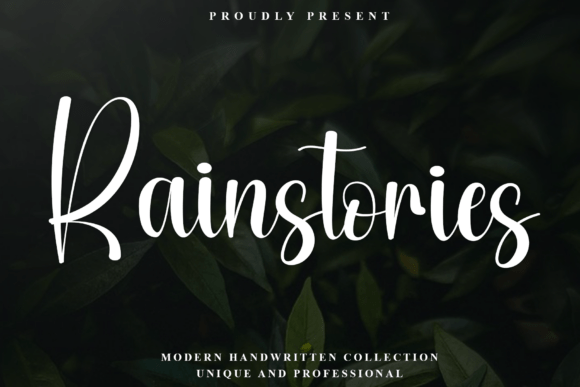
Rainstories is a beautifully flowing and elegant modern handwritten script font. Its smooth, generous curves and graceful, elongated strokes give it a sophisticated, signature look. This professional and unique typeface is perfect for personal branding, photography watermarks, luxury wedding stationery, editorial design, and any project that requires a sweeping, authentic, and naturally luxurious touch. However, to truly understand its value, we have to look beyond the description and analyze how it functions in a real-world design environment. It is not merely about the letters themselves, but about the negative space between them and the rhythm they create on the page.
The defining characteristic of this typeface is its "generous curves." Unlike tight, scratchy, or overly complex calligraphy fonts that can look chaotic when scaled up, this script breathes. The strokes elongate with purpose, creating a visual flow that guides the eye naturally from left to right. This is crucial for readability in script fonts. If the ascenders and descenders are too wild, the text becomes a visual mess. If they are too tame, the font loses its personality. Rainstories strikes a delicate balance, offering the flair of a signature while maintaining the clarity of a professional headline.
Why Flow Matters in Visual Identity
For a graphic designer or a small business owner, "flow" isn't just an abstract artistic concept; it is a functional requirement. When you are building a brand identity, consistency is king. A font with a smooth, predictable flow ensures that your messaging looks cohesive whether it is printed on a massive billboard or rendered as a small footer on a mobile website. The elongated strokes of this premium font allow it to fill space elegantly without needing excessive tracking or leading adjustments. It creates an immediate sense of luxury, signaling to your audience that the product or service you are offering is high-quality and meticulously curated.
Practical Applications: From Screen to Print
One of the biggest challenges in modern typography is finding a font that translates well across different mediums. A typeface that looks stunning on a high-resolution screen might look like a blob of ink on textured paper. Conversely, a font designed for print might appear jagged on a digital interface. Because of its smooth vector construction, this typeface adapts remarkably well to various environments.
Consider the needs of a social media manager. In the fast-scrolling environment of Instagram or Pinterest, you have a split second to grab attention. A sweeping, authentic script font acts as a visual hook. It is perfect for quote graphics, story headers, and promotional announcements. It adds a layer of personality that rigid sans-serif fonts often lack. When paired with a clean, geometric sans-serif for body text, it creates a dynamic hierarchy that is both easy to read and visually arresting.
Elevating Physical and Digital Products
For those in the e-commerce space, particularly in packaging design, the tactile experience matters. Imagine this font foil-stamped on a matte black box or letterpressed onto a cotton tag. The "naturally luxurious touch" of the letterforms mimics high-end fashion branding. It suggests that the item inside is bespoke and exclusive. This is particularly effective for:
- Luxury Wedding Stationery: The elongated strokes are ideal for invitations, RSVP cards, and envelope addressing, providing a romantic and formal feel.
- Photography Watermarks: A watermark needs to be visible enough to claim ownership but elegant enough not to ruin the image. This script blends seamlessly into the corner of a portrait or landscape shot.
- Merchandise: Tote bags, mugs, and apparel often benefit from a single, impactful phrase. A display font like this allows a simple word like "Dream," "Create," or "Wander" to become a central design element.
Furthermore, in the realm of editorial design, such as magazine headers or blog post titles, this font offers a refreshing break from the monotony of standard serif and sans-serif headlines. It injects personality into lifestyle blogs, travel journals, and wellness magazines, making the content feel more personal and approachable to the reader.
Mastering Typography: Pairing and Readability
While Rainstories is a powerful standalone asset, its true potential is unlocked through thoughtful font pairing. A common mistake among beginners is using two script fonts together, which usually results in visual clutter. Because this font has a strong personality, it acts as the "voice" of the design, while your secondary font should act as the "support."
The safest and most effective approach is to pair this handwritten script with a sans-serif font. Look for sans-serifs with open apertures and simple geometric shapes. The clean lines of the sans-serif will provide a resting place for the eyes, allowing the script to shine without overwhelming the viewer. For example, using Rainstories for a main headline and a font like Montserrat or Lato for the subheading creates a perfect balance of elegance and utility.
Navigating Legibility in Display Type
Readability is subjective, but it is always paramount. Even the most beautiful premium font is useless if your audience cannot decipher the message. When using a script font for longer words or sentences, pay attention to the kerning (the space between individual letters). Handwritten fonts often require manual kerning adjustments to ensure that letters don't collide awkwardly.
Additionally, consider the background. This font, with its sweeping strokes, performs best when it has room to breathe. Avoid placing it over busy, high-contrast textures or intricate photographs. If you must use a background image, apply a subtle overlay or a blur effect to the image to ensure the text remains the focal point. This is a standard practice in web design and digital product creation, ensuring that your marketing assets remain professional and legible across all devices.
The Business Case for Unique Typography
In a crowded marketplace, visual distinctiveness is a competitive advantage. Consumers are constantly bombarded with generic content. When a brand uses a unique typeface that feels hand-crafted, it triggers a psychological response. It suggests that there is a human behind the brand—someone who cares about the details. This is the essence of personal branding.
For entrepreneurs and small business owners, investing in a commercial font like this is a strategic move. It allows you to own a piece of your visual identity. Unlike free fonts, which are often overused and can sometimes come with licensing risks, a professional typeface comes with the assurance of quality and legal clarity.
Checking the Fine Print: Licensing and Assets
Before finalizing your purchase or download of any design assets, it is always wise to review the licensing. Most premium fonts come with specific tiers—personal vs. commercial. If you are selling products (like t-shirts or mugs) or using the font for client work, you generally need a commercial license. This ensures you are legally protected.
Furthermore, check what is included in the package. A comprehensive font file often includes multiple styles, such as italic versions, bold weights, or stylistic alternates. These extras are incredibly valuable. They allow you to create variation within your design without needing to buy another font. For instance, if the standard "a" doesn't fit your aesthetic, a stylistic alternate might offer a looped version that fits perfectly.
Final Thoughts on Creative Execution
Choosing a font is rarely just about the alphabet; it is about choosing a voice for your project. Rainstories offers a voice that is confident, fluid, and inherently sophisticated. It is a tool designed for those who want to bridge the gap between digital precision and human warmth.
Whether you are designing a logo for a new startup, laying out a lookbook for a fashion brand, or creating a set of inspirational prints, this typeface provides the versatility and elegance required to make a lasting impression. By focusing on the flow of the curves and the integrity of the design, you can transform a simple layout into a memorable visual experience. Treat it as a cornerstone of your design toolkit, and it will consistently deliver the polish and professionalism your work deserves.