Sanford Region: The Slab Serif for Bold Brand Statements
You know that moment when a logo just hits? It’s not always about complex illustrations or trendy gradients. Sometimes, it’s the raw, confident presence of a typeface that stops you mid-scroll. It feels substantial, trustworthy, and impossible to ignore. That’s the kind of visual punch a condensed slab serif delivers, and it’s exactly why typefaces like Sanford Region have become secret weapons for designers and entrepreneurs who need to make an immediate, lasting impression without saying a word.
The Anatomy of a Strong First Impression
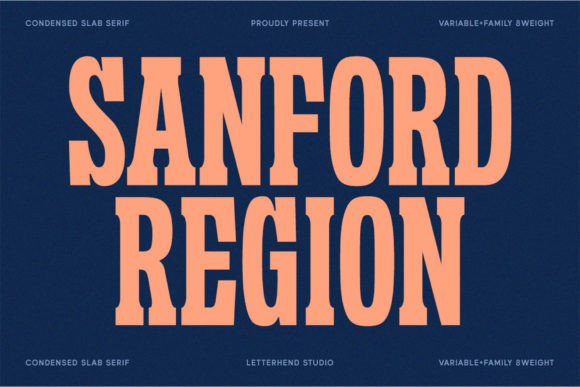
Let's break down what we're actually looking at. Sanford Region is a condensed slab serif, which is a mouthful but describes its personality perfectly. "Condensed" means the letters are narrower and taller, allowing you to fit more impact into a tighter space—ideal for headlines or logo lockups where real estate is limited. "Slab serif" refers to those sturdy, block-like serifs (the little feet at the ends of letters) instead of the delicate, tapered ones you'd find on a classic serif like Times New Roman. The result is a typeface that feels both modern and foundational, with a structured geometry that commands attention.
Visually, it strikes a brilliant balance. It’s not as sterile as a stark sans-serif, but it avoids the sometimes fussy or overly traditional vibe of classic serifs. The letterforms in Sanford Region have a strong, uniform stroke weight, which gives them a solid, dependable look. This isn't a font that whispers; it declares. It’s this quality that makes it a powerhouse for specific applications where clarity and authority are non-negotiable.
Where This Typeface Truly Shines: Practical Applications
Knowing a font looks good is one thing. Knowing where to use it is where the real value lies. This is where a display font like Sanford Region moves from a nice-to-have to a crucial design asset. Its character is perfectly suited for projects that need to convey strength, reliability, and a touch of contemporary flair.
- Logo & Brand Identity: For a brand that wants to project confidence and stability—think a boutique architecture firm, a premium coffee roaster, or a high-end grooming product—Sanford Region as a logotype or wordmark is a stellar choice. Its condensed nature makes it exceptionally versatile for fitting into square social media profile pictures, horizontal headers, and even vertical merchandise tags without losing legibility or impact.
- Packaging & Labels: On a shelf crowded with products, packaging design needs to communicate instantly. The bold, clean lines of this typeface ensure product names and key claims (like "Organic" or "Small Batch") are readable from a distance. It works beautifully on everything from minimalist cosmetic boxes to rustic craft beer labels, adding a layer of perceived quality.
- Editorial & Poster Design: Magazines, book covers, and event posters thrive on strong typographic hierarchy. Use Sanford Region for a chapter title or a main headline to create a dramatic anchor point that draws the reader's eye. Pair it with a clean sans-serif for body text, and you’ve got a layout that feels both professional and engaging.
- Digital Presence & Social Media: In the fast-paced world of social media graphics and website hero sections, you have milliseconds to capture attention. A bold, condensed headline in Sanford Region can stop the scroll. It’s perfect for Instagram story text, YouTube thumbnails, or the main heading on a landing page where you need to state your value proposition clearly and powerfully.
Beyond Aesthetics: The Strategic Benefits of a Cohesive Font
Choosing a typeface isn't just a creative decision; it's a strategic one that directly influences how your audience perceives and interacts with your brand. Implementing a versatile and distinctive font like Sanford Region across your touchpoints builds a silent, powerful consistency.
Visual Consistency & Brand Recognition: When your website headlines, email newsletter titles, and product packaging all use the same strong typographic voice, it creates a seamless experience. This repetition is what builds brand recognition. Customers start to associate that specific visual style with your business, making you more memorable in a crowded market.
Professional Presentation: Nothing undermines a great product or service faster than amateurish design. A premium font elevates everything. It signals that you care about details, which translates into trustworthiness in the mind of your audience. Whether it’s a wedding invitation or a corporate brochure, the right typeface sets the tone of quality.
Readability with Impact: A common concern with display or condensed fonts is readability at smaller sizes. This is where understanding your project's context is key. Sanford Region is engineered for impact at larger sizes—headlines, logos, pull quotes. You wouldn’t set a 200-page novel in it. The wisdom is in pairing: use its bold personality for display purposes and couple it with a highly legible sans-serif or a simpler serif for longer body copy. This dynamic pairing ensures your design is both striking and functional.
Making It Work for You: A Practical Checklist
So, you're intrigued. How do you go from appreciating a font to successfully using it? Here’s some actionable advice for integrating a typeface like this into your workflow.
- Define Your Project's Personality First: Before you even open your design software, ask: what feeling should this project evoke? Trustworthy and established? Modern and disruptive? Bold and creative? Sanford Region leans into confidence and structure. If that aligns with your goal, you’re on the right track.
- Explore the Included Styles: Don't just use the default weight. A good font family will often include variations. Check if Sanford Region has a bold, light, or italic version. Using different weights from the same family is a foolproof way to create hierarchy and visual interest while maintaining perfect cohesion.
- Master the Art of Font Pairing: This is where the magic happens. Pair your strong slab serif with a complementary font. A clean, geometric sans-serif (like a Montserrat or a Lato) creates a modern, balanced look. A delicate script font can add a touch of elegance for special occasions like invitations. Always test pairings in context—at the actual size they’ll be used—to ensure they work together, not against each other.
- Never Skip the Readability Test: Print it out. View it on a phone screen. Zoom out. Does the headline remain clear and powerful? Does the body text next to it remain easy to read? If anything feels strained, adjust your sizing, spacing, or consider swapping the body text font.
- Understand the License: This is a crucial, often overlooked step. If you’re using the font for a client project, a product you sell, or widespread marketing, you need to ensure you have the correct commercial license. Reputable font foundries are clear about their licensing terms. Purchasing the right license protects you legally and supports the type designers who create these valuable tools.
Ultimately, a typeface is more than a set of letters. It’s a tool for communication, a vessel for your brand’s personality, and a cornerstone of your visual strategy. Sanford Region, with its condensed slab serif form, offers a specific and powerful voice—one of assured clarity and modern strength. By understanding its strengths and applying it thoughtfully to the right projects, you can transform good designs into unforgettable ones that truly connect with your audience.