Kelmora: The Psychedelic Blackletter Font That Commands Attention
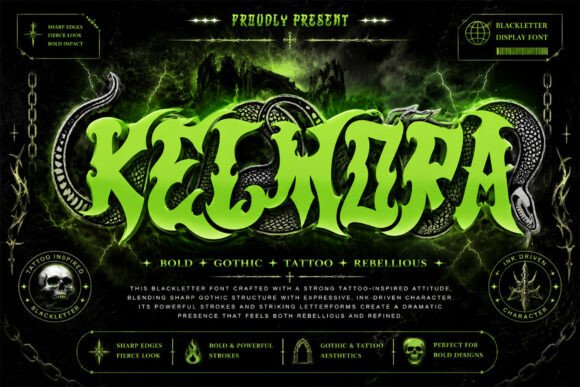
Imagine a typeface that feels like it was pulled from the cover of a 1970s psychedelic rock album, yet holds the sharp, structured elegance of a modern luxury brand. That’s the magnetic pull of Kelmora. It isn’t just another display font; it’s a bold visual statement that merges the raw energy of underground art with sophisticated, contemporary design. For anyone looking to inject a powerful dose of personality and edge into their creative work, Kelmora offers a compelling solution that’s as versatile as it is striking.
A Fusion of Gothic Strength and Organic Flow
At its core, Kelmora is a study in contrasts. It’s built on a foundation of strong gothic letterforms—think the dramatic, angular strokes of classic blackletter—but it twists and softens them with expressive, organic curves. This unique blend gives the typeface its distinctive character. It feels both ancient and futuristic, rigid and fluid. The result is a font that doesn’t just sit on a page; it performs. The letterforms have a rhythmic quality, almost like they’re in motion, which makes them perfect for designs that need to convey energy, creativity, and a touch of rebellion.
This visual duality is what makes Kelmora so adaptable. It can evoke the gritty texture of vintage concert posters while also feeling right at home on a sleek, minimalist product label. For a brand, this means Kelmora can help craft an identity that feels layered and rich with story, avoiding the flat, one-dimensional look that so many generic fonts provide. It’s a typeface with depth, one that rewards a second glance.
Where Kelmora Truly Shines: Practical Applications
Theory is nice, but where does a font like Kelmora actually work in the real world? Its bold, high-impact nature makes it ideal for projects where typography is the star of the show. Think of the headline on a magazine cover, the name on a craft beer label, or the title card for a film festival. It’s designed for moments of first impression.
Consider these practical uses:
- Album & Poster Design: Kelmora’s roots in psychedelic and underground aesthetics make it a natural fit for music and event artwork. It instantly sets a mood of intensity and artistry.
- Premium Packaging & Beverage Labels: For products like specialty spirits, artisanal coffee, or boutique cosmetics, Kelmora adds a layer of edgy sophistication that stands out on a crowded shelf.
- Logo & Brand Identity Systems: While it might be too bold for body copy, Kelmora is exceptional for creating a memorable logotype or a powerful brand mark that needs to communicate strength and creativity.
- Social Media & Digital Ads: In a fast-scrolling feed, a post set in Kelmora stops the thumb. It’s perfect for quote graphics, event announcements, or promotional banners where you need immediate visual impact.
- Editorial & Layout Design: Use it for chapter titles in a book, section headers in a magazine, or pull quotes in a blog to add dramatic flair and break up long stretches of text.
- Merchandise & Invitations: From band t-shirts to exclusive event invites, Kelmora helps create items that feel special and collectible.
The key is using it strategically. Kelmora is a display font, meaning it’s built for headlines and short bursts of text, not for reading paragraphs. Its strength lies in its ability to set a tone and create a focal point.
Building a Recognizable Brand with Bold Typography
Typography is a silent ambassador for your brand. The fonts you choose communicate values, personality, and quality before a single word is read. A typeface like Kelmora sends a clear message: this brand is confident, artistic, and unafraid to stand apart from the crowd.
For entrepreneurs and small business owners, especially in creative fields, using a premium font like this can elevate your entire visual presentation. It moves your branding away from overused, free fonts and into a realm of professional, intentional design. This consistency across your logo, website headers, packaging, and social media builds stronger brand recognition. When a customer sees that distinctive lettering, they immediately associate it with your unique aesthetic.
However, wielding such a powerful typeface requires a thoughtful approach. Its high contrast and detailed forms mean readability can become an issue at smaller sizes. This is where understanding font pairing becomes essential. Kelmora works beautifully alongside clean, simple sans-serif or serif fonts. Let Kelmora handle the hero headline, and use a more neutral, highly readable font for subheads and body copy. This creates a visual hierarchy that guides the viewer’s eye and ensures your message is both seen and understood.
Tips for Choosing and Testing a Font Like Kelmora
Before you commit to a creative font for a major project, a little due diligence goes a long way. Here’s some practical advice:
- Match the Font’s Personality to Your Goal: Does the energetic, psychedelic vibe of Kelmora align with your project’s core message? It’s perfect for a music festival, but might feel out of place for a corporate law firm. Always ensure the typeface supports the story you’re telling.
- Test Extensively: Don’t just look at the font specimen sheet. Type out your actual project headline or brand name. Check how the letters connect, the spacing between characters, and how it looks at the exact size you’ll use. Look for any awkward combinations.
- Explore All Included Styles: Many premium fonts come with more than just the regular weight. Check if Kelmora includes alternate characters, ligatures, or stylistic sets. These extras can give you more creative flexibility and help you craft a truly unique typographic treatment.
- Consider the Commercial License: If you’re using the font for a client project, merchandise for sale, or a widely distributed digital product, ensure you have the correct commercial font license. This protects both you and the font designer and is a mark of professional practice.
Ultimately, a typeface like Kelmora is more than a set of letters—it’s a design tool with a strong point of view. It’s for the project that needs to feel powerful, artistic, and unmistakably contemporary. When used thoughtfully, it doesn’t just display words; it creates an atmosphere, builds a brand, and leaves a lasting impression that generic typography simply can’t achieve. It’s the kind of asset that can help transform a good design into a truly memorable one.