Shock Blow: A Graffiti Font with Urban Energy
If you've ever walked through a city and felt the raw, immediate impact of a mural or a piece of street art, you understand the power of that visual language. It's bold, unapologetic, and designed to grab your attention from a distance. Translating that energy into a digital design project—whether it's a brand identity, a social media campaign, or a poster for an event—requires a typeface that doesn't just sit politely on the page. It needs to have presence. This is where a font like Shock Blow enters the conversation, offering a direct line to that gritty, expressive urban aesthetic with a surprising degree of stylistic control.
More Than Just Letters: The Dual Personality of Shock Block
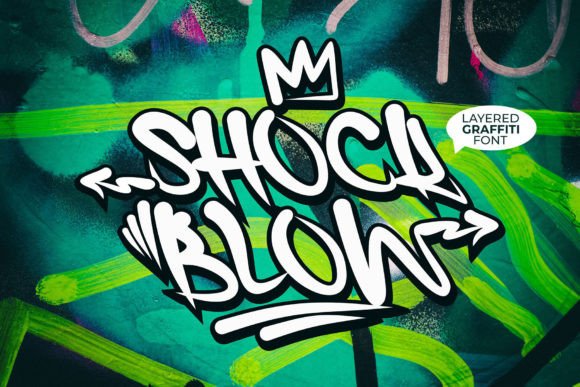
At first glance, Shock Blow presents itself as a classic graffiti-style display font. Its letterforms are built with the dynamic, confident strokes you'd expect, full of movement and character. But what sets it apart is its thoughtful design as a system, not just a single style. The typeface actually comes in two distinct variations: Shock Block and Shock Blow. Think of them as two sides of the same urban coin.
Shock Block is the foundation. It's the solid, heavyweight version. The characters are filled in, providing a bold, straightforward punch. This is your workhorse for headlines that need to be read clearly and immediately. It has the weight and clarity of a sans serif font but with all the stylistic flair of hand-painted lettering. It’s perfect for when you want the graffiti vibe without sacrificing directness.
Shock Blow is where the artistic flair really shines. This version incorporates swash characters—those decorative flourishes and extensions that can be added to the beginning or end of letters. A stroke might extend into a dramatic tail, or a letterform might get an extra curve that adds a sense of motion. These aren't just random curls; they're integrated into the design to enhance the font's expressive quality. Using Shock Blow is like adding a signature flourish to your typography, giving your text a custom, hand-crafted feel that’s hard to achieve with standard fonts.
Practical Applications: Where This Font Truly Shines
Understanding the font's personality is one thing, but knowing how to deploy it is what matters for your projects. This isn't a body copy font; it's a specialist tool for specific jobs where impact is the primary goal.
Branding & Logo Design: For brands targeting a youth market, streetwear labels, music producers, urban exploration blogs, or extreme sports companies, Shock Blow can form the core of a powerful visual identity. Imagine a logo for a skate shop using the solid Shock Block for the main wordmark, with a single swash from Shock Blow on the first letter to add a unique signature. This creates a brand that feels authentic and connected to street culture. It's a premium font choice that communicates a specific attitude.
Posters & Event Graphics: This is a natural home for a graffiti-inspired typeface. Designing a flyer for a hip-hop show, a street art festival, or a community block party? Shock Blow can set the tone instantly. The shadow style mentioned in its description adds a three-dimensional effect that makes headlines pop off the page, adding depth and visual interest that flat, standard fonts can't match.
Social Media & Digital Content: In the fast-scrolling world of Instagram and TikTok, you have milliseconds to make an impression. Using Shock Blow for video thumbnails, quote graphics, or story headlines can stop a user mid-scroll. Its boldness ensures your message is seen even on a small screen. It’s an excellent tool for content creators and marketers looking to inject energy and a sense of immediacy into their feed.
Packaging & Merchandise: Think about product packaging that needs to stand out on a crowded shelf or in an online store. A hot sauce, a craft beer, or a streetwear t-shirt brand could use this font to communicate a rebellious, energetic vibe. The swash characters can be used to create unique logos or decorative elements on labels and tags, turning packaging into a piece of brand storytelling.
Matching Typography to Your Project's Goals
Choosing a font like Shock Blow is a strategic decision. It's not just about picking something that looks "cool." It's about aligning your typography with the message and audience of your project.
Consider the Tone: The font's personality is bold, urban, and expressive. It's perfect for projects that are energetic, youthful, rebellious, or creative. It would be a mismatch for a corporate law firm's annual report or a luxury spa's minimalist brochure. Always ask: does this font's voice match my brand's voice?
Pairing for Balance: A display font with this much character needs a partner that supports it, not competes with it. For body text, you'll want a clean, highly readable sans serif or even a simple serif font. Think of fonts like Roboto, Open Sans, or Lato for digital, or a classic like Garamond for print. The goal is to let Shock Blow be the star of the headlines while your supporting font handles the longer reading with clarity.
Readability is Key: While it's tempting to use the most decorative swash characters everywhere, restraint is crucial. Overusing the flourishes can make text hard to read, especially at smaller sizes. Use the solid Shock Block for longer headlines or subheadings, and reserve the expressive swashes of Shock Blow for a single initial cap, a logo, or a very short, impactful phrase. Always test your designs at the size they'll be viewed.
Unlocking Its Full Potential
To get the most out of a creative font like this, a little exploration goes a long way. Don't just install it and start typing.
Review All Included Styles: A well-designed font package often includes more than meets the eye. Check for alternate characters, ligatures (special combined letter pairs), and the different stylistic sets. Shock Blow's swash characters are a key feature, so take the time to see which letters have decorative options and how they connect.
Test in Context: Mock up your design before finalizing. Place your headline in a poster template, see how it looks as a profile picture, or test it on a product mockup. Seeing the font in a real-world application will quickly show you if it's working or if you need to adjust the style, size, or pairing.
Understand the License: If you're using this for a commercial project—like a client's logo, merchandise for sale, or a monetized YouTube channel—ensure you have the correct commercial license. This is a standard part of using design assets professionally and protects both you and your client.
Ultimately, a typeface like Shock Blow is a powerful tool in your design toolkit. It offers a bridge between the raw energy of street art and the controlled environment of digital and print design. By understanding its dual styles, applying it to the right projects, and pairing it thoughtfully, you can harness that urban impact to create designs that don't just communicate a message, but make it felt.