Unleash the Shadows: Designing with Toxic Inked
There is a specific moment in the design process where a project stops looking "nice" and starts looking "dangerous." It’s that shift from polite, safe layouts to something that grabs the viewer by the collar. If you are working on a branding project or a marketing campaign that needs to evoke a sense of mystery, grunge, or raw power, standard corporate typefaces will likely fall flat. You need a typeface that breathes life—or perhaps undeath—into your work. This is where Toxic Inked enters the picture. It is a scary yet fun display font, designed with a mysterious horror vibe that makes it an absolute powerhouse for Halloween spooktacular designs, but its utility extends far beyond the month of October.
The Visual Anatomy of a Horror Typeface
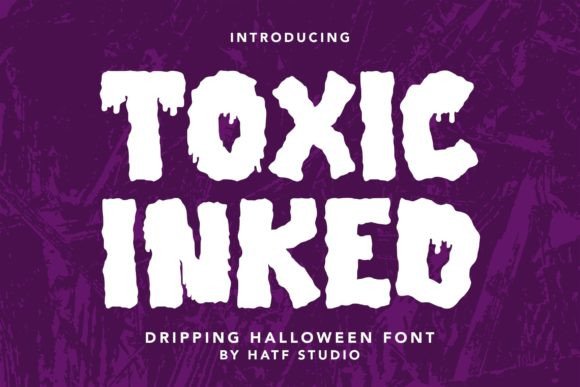
At first glance, Toxic Inked strikes a balance between chaos and legibility. It isn't just a "messy" font; it is a carefully crafted display typeface that mimics the look of ink splatters and rough edges without sacrificing the integrity of the letterforms. As a creative font, it features irregular baselines and textured strokes that suggest a hand-crafted origin. This kind of modern typography is essential for designers who want to inject personality into their work without relying on generic stock imagery.
What makes this premium font visually appealing is its versatility within the horror and alternative niches. It carries the weight of a heavy serif font but with the unpredictability of a script font gone wild. The visual characteristics include sharp angles and ink-bleed effects, which add a tactile quality to digital designs. When you use Toxic Inked, you aren't just displaying text; you are displaying an attitude. It works exceptionally well when set against dark, moody backgrounds, allowing the textured edges of the letters to pop and create immediate visual interest.
From Concept to Brand Identity
For creative entrepreneurs and small business owners, typography is a silent ambassador for the brand. If your business operates in the alternative fashion space, the heavy metal music scene, or the gaming industry, your brand identity needs to signal "insider" status immediately. Using a standard sans serif font might make your brand look accessible, but it won't make it look memorable.
Consider the power of logo design. A logo sets the stage for everything else. By utilizing a display font like Toxic Inked, you can create a logo that feels authentic to the subculture you are serving. This typeface is particularly effective for merchandise design. Imagine this font screen-printed on a black hoodie or embossed on a leather patch; the texture of the font translates beautifully to physical products because it mimics imperfections that look great on fabric.
However, brand recognition relies on consistency. If you choose this font for your logo, you need to ensure it fits into your broader visual communication strategy. It shouldn't be used for every piece of text on your website, as that would overwhelm the eye. Instead, use it as the anchor of your visual identity—the headline grabber—while pairing it with a more neutral typeface for supporting information.
Practical Applications in Packaging and Print
Packaging design is one of the most critical touchpoints for a consumer. On a crowded shelf, a product has roughly three seconds to capture attention. For products like craft beers, hot sauces, vinyl records, or horror-themed subscription boxes, Toxic Inked offers a distinct advantage. Its aggressive styling suggests intensity and flavor, which can be a major selling point.
When applying this font to packaging, pay attention to readability considerations. Because it is a textured display font, it works best for large headlines or product names. Avoid using it for the nutritional information or legal disclaimers on the back of the package; that requires a legible sans serif font or a clean serif font. The contrast between the chaotic headline and the clean body text will actually make the packaging easier to read and more professional in its presentation.
Beyond physical goods, think about print materials like event posters. For a haunted house attraction, a horror film festival, or a Halloween party invitation, this font does the heavy lifting of setting the mood. It eliminates the need for excessive design assets; sometimes, a bold title in Toxic Inked paired with a simple date and location is all you need to create an effective poster.
Dominating Digital Spaces: Web and Social Media
In the realm of web design and social media graphics, scroll-stopping power is currency. Content creators and marketers are constantly battling for attention in fast-moving feeds. A blog post titled "Top 10 Scary Movies" will get more clicks if the title image uses a font that visually communicates the genre.
Toxic Inked is an excellent tool for digital products and marketing assets. It can be used to create compelling YouTube thumbnails, Instagram story highlights, or Twitch overlay headers. Because it is a high-contrast font, it ensures that your message is seen even on small mobile screens, provided the background isn't too busy.
For editorial design, such as digital magazines or e-book covers, this typeface helps establish a hierarchy. It draws the reader's eye to the main headline, signaling that the content inside is exciting. When used correctly, it improves audience engagement by promising a specific type of experience—something thrilling, edgy, or unconventional.
Mastering Font Pairings and Hierarchy
One of the most common mistakes in typography is trying to pair two loud fonts together. Toxic Inked has a very strong voice; it doesn't need a partner that shouts over it. To achieve visual consistency and professional presentation, you need to pair it with a typeface that knows when to step back.
A geometric sans serif font is often the best companion. The clean, mathematical lines of a sans serif provide a resting place for the eyes after the intensity of the display font. Alternatively, a simple handwritten font can work if you want to maintain a casual, grungy vibe without the heavy weight of the display style.
Here is a practical workflow for testing your pairings:
- Check the x-height: Ensure the lowercase letters of your body text don't look microscopic compared to the capitals of your display font.
- Test for weight balance: If Toxic Inked is very bold, your body text should probably be a "Regular" or "Light" weight to create contrast.
- Review included font styles: Many premium fonts come with variations. Check if there is a "Bold" or "Italic" version of your body font that complements the texture of the display font.
- Mockup testing: Don't just look at the letters in a font manager. Type out actual sentences relevant to your project to see how the kerning and spacing feel in a real-world context.
Licensing and Commercial Viability
For designers working with clients, the technical side of typography is just as important as the aesthetic. Before you fall in love with a typeface, you must understand commercial licensing. Using a font without the proper license can lead to legal headaches for you or your client.
Toxic Inked is typically available as a commercial font, meaning you pay once (or subscribe, depending on the marketplace) and gain the rights to use it in commercial projects. This includes client work, merchandise for sale, and digital products. Always double-check the End User License Agreement (EULA). Some licenses restrict the number of "seats" (computers) that can install the font, while others may have specific rules regarding embedding fonts in apps or software.
When presenting your work to a client, it adds a layer of professionalism to mention that you have sourced high-quality design assets with the correct licensing. It shows that you care about the longevity and legality of their brand identity, not just the immediate visual result.
Ultimately, typography is about communication. While Toxic Inked screams "horror" and "Halloween," it also whispers "authenticity" to the right audience. It is a specialized tool in a designer's arsenal, perfect for those moments when polite typography simply won't do the job. Whether you are designing a logo for a metal band, a poster for a film festival, or a social media campaign for a spooky product launch, this font provides the raw, inked aesthetic needed to make a lasting impression.